By Amrinder Sahota
Suhotra. Sahotra. Sahota. Sihota. Four names can look like the beginning of an answer. For me, they became the beginning of more questions.
I went looking for my ancestors. The search changed what I meant by “my people.” Sun and Moon: One Tree, Many Names follows that movement through family memory, Punjab’s heritage, older texts, solar and lunar traditions, and changing faiths.
A surname can make the past feel close. It can also make us want certainty before the evidence is ready to give it. The four names are the starting points of this personal search; their appearance together is not, by itself, proof of a single documented family line.
What kind of story does a name carry?
There is the story remembered within a family. There is the tradition passed down through a community. There is the account we can examine in a text or other historical evidence. Each can matter to the person asking where they came from, but they cannot simply stand in for one another.
That distinction matters throughout Sun and Moon. A memory can tell us something about a life and a sense of belonging. A tradition can show what people have chosen to carry forward. A historical claim needs evidence appropriate to that claim. Respecting the past includes being honest about what remains uncertain.
If you arrived here searching for Sahota family history, this book offers a personal journey through those questions. It does not promise to establish every reader’s genealogy. The invitation is to follow the search and consider what it opens up, including the places where a neat answer would be too easy.
Punjab, ancestry and belonging
Punjab’s villages and family memories keep the search close to human lives. The larger questions of solar and lunar traditions and changing faiths extend it beyond a single household. Along the way, ancestry becomes more than a question of finding a name in the past.
It becomes a question about how we live with what we inherit. How can we carry forward courage without carrying hatred? What do we lose when pride in our own story prevents us from recognising someone else’s? And what might belonging mean if it can grow as we learn?
These questions are the reason the book reaches beyond people who share the four names. You can come to it with a different surname, faith or family history. The wish to understand our beginnings does not belong to one family.
Two ways into the past
In Sun and Moon, I follow ancestry through reflective nonfiction. In Mrig: Reborn in the Mahabharata, Volume 1, that interest takes an imaginative form: a man searching for his family’s past wakes as a child in the world of the epic.
The two books make different promises to the reader. Sun and Moon asks you to accompany a personal search and weigh memory, tradition and history with care. Mrig invites you into reincarnation fantasy, where friendship and knowledge bring difficult choices.
Begin with a sample
The free Sun and Moon sample below is a place to start. Read it with the names and questions you carry. You do not need to arrive with an answer about your ancestry—or agree with every reflection—to join the journey.
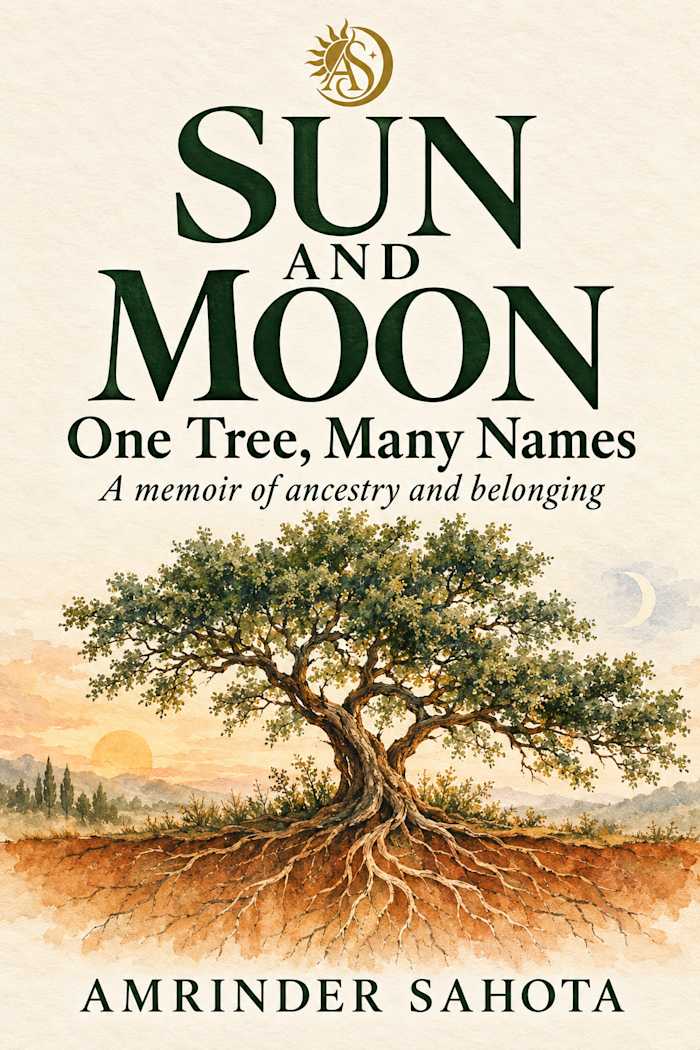
Sun and Moon: One Tree, Many Names
Ancestry and belonging
Four names begin a search that changes what “my people” can mean.
Read the free Sun and Moon preview
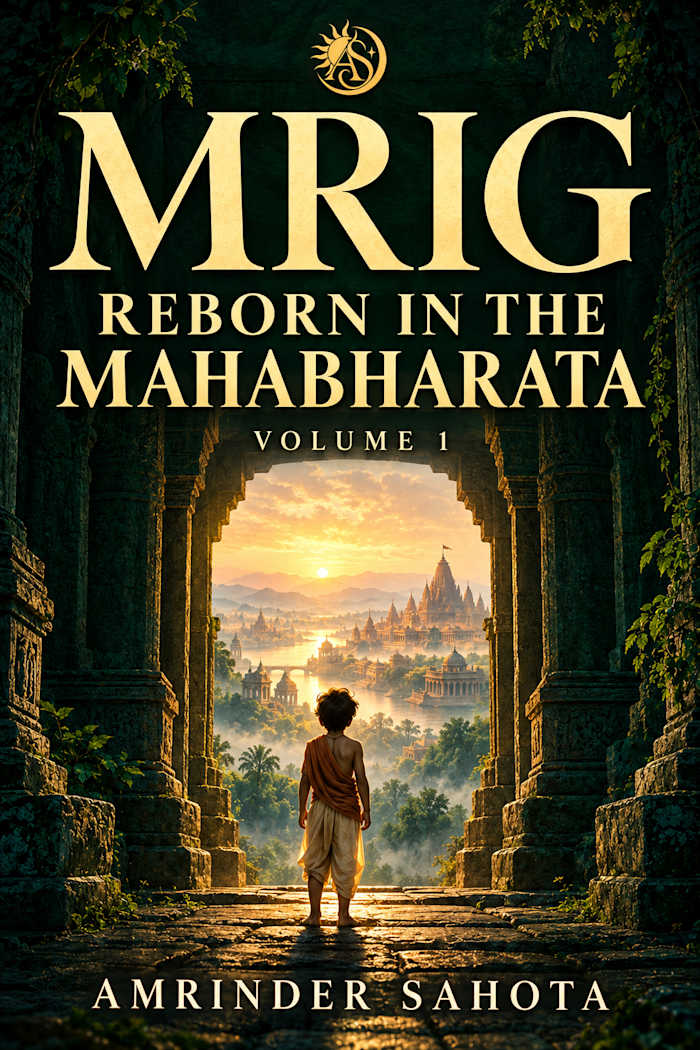
Mrig: Reborn in the Mahabharata, Volume 1
Reincarnation fantasy
He knew them as legends. Now he has to grow up beside them.
Explore Mrig and its reading guide

About Amrinder Sahota
Amrinder Sahota writes about the stories people inherit—and what happens when they begin to question them. In Mrig: Reborn in the Mahabharata, that question becomes an epic fantasy about rebirth, friendship and the cost of power. Sun and Moon: One Tree, Many Names follows a personal search through ancestry, Punjab’s heritage and family memory toward a wider understanding of belonging. The Day She Wasn’t Dead explores second chances through standalone time-travel fiction. His work explores identity through both imaginative fiction and reflective nonfiction.